November 3, 2009

Cattle Ear Tags: The Correct Way to Tag Cattle

Tagging is an important part of animal identification, but must be done properly. Tagging an animal is very similar to a human getting their ears’ pierced. Learn how to properly tag your animals and maintain proper care afterwards.

Figure 1. Proper tag placement location.                    

Figure 2. Visual panel, or male portion of the tag. 
 
Figure 3. EID button, or female portion of the tag.          


Figure 4. Proper placement of a tag in the tag applicator. 

Proper Steps to Livestock Tagging

1. Properly secure the animal to apply tag. Movement of the animal’s head could create an undesirable situation to appropriately apply the ear tag. This could cause injury to the person or livestock, or improper tagging of the animal. The following immobilization suggestions work best, depending on species:
• Cattle: Chute with a head gate, halter and/or nose lead.
• Swine: Confine in a small pen, hog boards to restrict movement, or use of a hog snare to completely secure the hog.
• Sheep & Goats: Proper hand grip of animal’s head to restrict movement.

2. Identify the tagging site on the animal’s ear.
• Tags should be applied in the middle third of the ear between the upper and lower ribs (Figure 1).
• It is important, when using electronic identification (EID) tags to apply the tag with the visual panel, male portion (Figure 2), of the tag on the outside back of the ear with the EID button, female portion (Figure 3), of the tag on the inside of the ear.

3. Proper hygiene and cleanliness during the tagging process is necessary to reduce the risk of infection. Use rubbing alcohol or a disinfectant solution to clean the jaw of the applicator. Also, clean the tagging site of the animal’s ear.

4. Place each half of the tag onto the applicator. The stud must be inserted completely onto the applicator pin and the panel/button portion placed under the opposite clip (Figure 4).

5. Before tagging the animal, check alignment of the tagger by closing the jaw of the applicator to the point where the two halves meet; the stud should be centered with the hole (Figure 5).

6. Position the applicator in the identified tagging site on the animal’s ear (Figure 6). Firmly close the applicator in a fast manner and release.

7. Examine the tag to verify it is correctly, comfortably, and securely positioned. Record necessary data on the animal.

8. Once the animal has been tagged, proper care must be taken to ensure the animal stays healthy. Daily topical application of hydrogen peroxide directly to the ear and ear tag puncture for five to seven days following the tag application will assist in preventing infection. Additional topical application of hydrogen peroxide to the ear in the following weeks is recommended until the ear is completely healed. If a serious infection occurs, consult your veterinarian for assistance and recommendations for treatment.

Figure 5. Proper tag alignment before tagging.


Figure 6. Correct and incorrect tagging sites.


Figure 7. Correct applicator pin.                Figure 8. Bent applicator pin. 


Figure 9. Correct matching female and male portion.

Tagging Precautions
1. Tags placed too far outside of the recommended position are prone to snagging and may be easily torn out.

2. Tags placed too far inside of the recommended position may cause pinching and/or necrosis.

3. Inspect the applicator pin to ensure the tip is in good condition (Figure 7). If the tip is bent or broken, insert replacement pin (Figure 8).

4. Check alignment by closing the jaws of the applicator
to the point where the two tag halves meet; the stud should be centered within the button hole.

5. Note that when using EID tags in Oklahoma, the number printed on the visual panel tag (male portion) should correspond and match (Figure 9) with the 15-digit number on the electronic tag button (female portion). There should be limited opportunity for error because they are nested or stored in the same package.

Source: Chris Richards and Rusty Gosz, Oklahoma State University Extension

Read more...

October 20, 2009

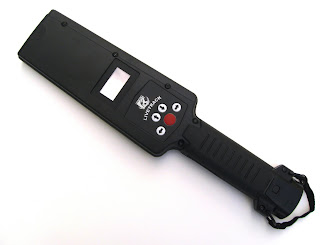
Syscan-ID Livetrack RFID Wand Reader


Syscan-ID Livetrack RFID Wand Reader

134.2Khz


Used by cattlemen to read RFID cattle ear tags. These tags are usually HDX or FDX-B ear tags, from Allflex, Destron, Y-Tex and so on.

imageThe Livetrack reader with Bluetooth has a communication range of over 300 feet to a laptop, PC, Scale head, or printer.

The Livetrack RFID Wand reader easily interfaces with all popular cattle management software's such as Cattlemax,  and Ranch Manager, just to name a few.

We also carry “RFID Wand Reader Kits”, ready to use solutions. Rugged, reliable and ready when you are.

Livetrack-Cattemax, and Livetrack-Ranch Manager.


Kits come in a hard carry case, preset to be used with the software. Cattlemax or Ranch Manager software is also included.

The reader is also compatible with most weight scale indicators, such as Reliable Scales, Tru-test, Gallagher, and many others.

Livetrack V3 Firmware Loader
One of the unique features of the Livetrack reader, is it’s firmware update software.

Very easy to use interface, to update the reader with the current firmware.


Livetrack RFID reader: “Print function”
image 
The Livetrack reader, has another unique feature, called the “Print Function” in the menu of the reader.

With the reader connected to the Livetrack mobile printer, it can print the template as seen on the left. The print out prints the tag EID’s along with date and time stamp, and convenient space to write additional info such as site #, and a signature as a hard copy.

We also carry this as a kit, called the Livetrack LPK, which includes, Livetrack reader (Bluetooth), rugged mobile 3” printer (Bluetooth) and hard carry case.


We can also create custom “Ready to Use” RFID kits, please contact us for more details. www.animalidsystems.com


© Copyright 2009, Animal ID Systems

Read more...

October 16, 2009

Animal ID Systems Store is now Online

Fall is finally upon us once again. We would like to wish all our friends the best of luck this season.

Animal ID Systems store is now online. you may visit our site www.animalidsystems.com .

IMG_2631We stock all major items related to Animal Identification. From RFID wand readers, to cattle management software, and all the import accessories for a successful set up.


We also stock hardware accessories such as Serial to USB converters, Bluetooth USB adapters and much more.
sku_5859_2

We are currently stocking ready to go kits. Which consist of RFID Wand reader, cattle management software and hard carry case. Everything needed to start Cattle EID right out of the box. You can view the kits here.


Over the next few weeks, we will make some information posts and how to tips on our blog, so please check back often.


© Copyright 2009 Animal ID Systems

Read more...

October 14, 2009

Issue 2: for Ohio farmers, Livestock, and You.

As a farmer and livestock producer from Johnstown, I need to explain why Issue 2 is so important to the Ohio farmers and to you, the consumer.

Ohio's farmers are like all Ohioans we rely on safe, affordable food sources to provide for our families. We are committed to the best care for our herds. Issue 2 is Ohio's plan to maintain excellent care for Ohio's livestock industry while maintaining a safe, affordable food supply that is locally grown.


logo 

The reasonable, common sense approach is to establish a Livestock Care Standards Board that will bring expertise to set animal care policy, which is something we can all support. The board will be made up of veterinarians, a food safety expert, a local humane society representative, three family farmers, two members from statewide farm organizations, the dean of an Ohio agriculture college and two members representing Ohio consumers. These members will be appointed by the governor, House and Senate.

These folks will use their best knowledge in making decisions affecting animal agriculture. They would be extremely more qualified to make these decisions than the alternative.

Issue 2 is far better than extreme measures offered by Washington-based advocates for veganism and who seek extreme, costly anti-farming regulations that will burden the production of meat, milk and eggs until these products are no longer affordable to Ohioans. Unwise regulation will drive agriculture from Ohio, putting thousands of farmers out of business, reducing our food supply, increasing food costs to you the consumer and forcing reliance on unsafe, imported foods.

Issue 2 will assure a balanced approach to livestock care, rather than input from an out-of-state interest group that knows nothing about agriculture in Ohio. These activists would impose rigid, inflexible and impractical rules for how livestock and poultry are housed. It would endanger the overall health and well-being of Ohio's flocks and herds.

Just a few of many endorsements for "yes" on Issue 2: Ohio Restaurant Association, Ohio Grocers Association, Ohio Chamber of Commerce, Ohio Farm Bureau, Ohio Association of Second Harvest Food banks, Ohio Veterinary Association, Ohio Association of Realtors, American Humane Association, along with the associations of Pork, Corn, Dairy, Poultry, Fish, Wheat, Horse, Lamb, Cattle, and Soybean. Governor Ted Strickland, George Voinovich, Pat Tiberi and Jay Hottinger have also endorsed this issue.

Go to www.OhioLivestockCare.com and see the facts.

Please join me in insuring safe, affordable food and vote "yes" for Issue 2 to create the Ohio Livestock Care Standards Board. Without farmers, where will food come from?

Source: Newark advocate

Kathy Heimerl

Read more...

October 11, 2009

Japan puts temporary ban on Beef imports from US meat packer Tyson

Japan’s agriculture minister issued a temporary Beef import ban on US meat packer Tyson on Saturday. The import ban was issued immediately after Japanese inspectors discovered bovine spinal columns in one of the boxes shipped from Tyson Fresh Meats Inc

At the moment the temporary ban is only for

Tyson's factory in Lexington, Nebraska, one of 46 meatpacking plants approved to export beef to Japan.

The other Tyson meat packing plants can still send packed beef as usual. This is not the first time the Lexington plant had been banned from Japan. There was a four month ban in 2007 when Japan imported and inspected meat that did not meet Japan’s safety standards.

Japan's new ruling has proposed a tough response to any violation to a bilateral safety agreement, including a blanket ban on US beef shipments.

Under the bilateral trade agreement, US exporters must remove spinal columns, brain tissue and other parts considered linked to mad cow disease. US beef shipments to Japan must also come only from cattle age 20 months or younger, which are believed to pose less of a risk.

US officials have urged Japan to allow imports of beef from cattle aged at least up to 30 months, a widely used safety standard elsewhere, and possibly scrap age restrictions.

Japan banned all US beef imports in 2003 after the first case of mad cow disease was discovered in the United States. Japan resumed importing American beef in 2006 after the bilateral trade agreement setting new safety standards.

© 2009 Copyright Animal ID Systems

Read more...

October 8, 2009

Man applies cattle ear tag to his ear.

This is a reminder to everyone, this is not the correct procedure to apply ear tags. Please do not try this at home.


Maybe next time he could apply an RFID tag, this way he could demonstrate to the cows, the correct way to run through the alley to the chute. Cheers Mate!

Read more...

October 6, 2009

The fight against Cattle Deaths in Africa

A private charity has renewed the fight against cattle deaths with the introduction of a new distribution channel for vaccine in the Kenyan market.

Commercialization of the vaccine is targeted at combating East Coast Fever, a livestock disease that kills millions of animals every year.

“We are exploring ways of transferring the production and distribution of the vaccine to the private sector through local manufacturers and distributors. This is extremely important in making the vaccine affordable, accessible and sustainable,” said Steve Sloan, the CEO of GALVmed, a Britain-based group.

The group plans to work with governments, veterinary products distributors and those from the private sector to avail the vaccine to farmers in East African countries and to scale up its production.

“This pioneering registration effort aims to ensure that the vaccine is approved and monitored by affected nations and enables local firms to sell and distribute it, embedding its sustainability. Registration in Malawi is already complete, with significant progress in Tanzania, Kenya and Uganda,” said the CEO’s firm that makes livestock vaccines, diagnostics and affordable medicines for the poor.

The International Livestock Research Institute (ILRI) and the UK Department for International Development are other partners in the project.

Veterinary scientist Henry Kiara, who has conducted research on the vaccine for 20 years, said ILRI was commercializing the production, distribution and delivery of the vaccine and would make it available to livestock keepers.

East Coast Fever is a cancer-like cattle disease that often kills animals within three weeks of infection. It is transmitted by the brown ear tick.

The vaccines have previously been distributed mainly through government-led initiatives, which are limited in funding.

The commercialization will also give small-scale livestock farmers the power to control the health of their animals.

The disease kills one cow in every 30 seconds in Africa.

Source: Business Daily Africa Read rest of the article here.

Read more...

  © Blogger template The Business Templates by Ourblogtemplates.com 2008

Back to TOP